

At London Fashion Week, Phoebe English’s AW26 Collection Made the Case for Quiet Sustainability
by Tia Janowski
On the 20th February, sustainable designer Phoebe English presented her latest collection, Lost Touch, at the Rose Easton Gallery in East London, quietly captivating London Fashion Week in the process.
Arriving minutes before the presentation began, it was immediately clear this would be something special. The bright, airy studio was flooded with winter sunlight, while a fashionable crowd hummed in anticipation. Live violin music drifted through the space, softening the atmosphere before the models emerged to bring English’s seasonal, botanically inspired narrative to life.
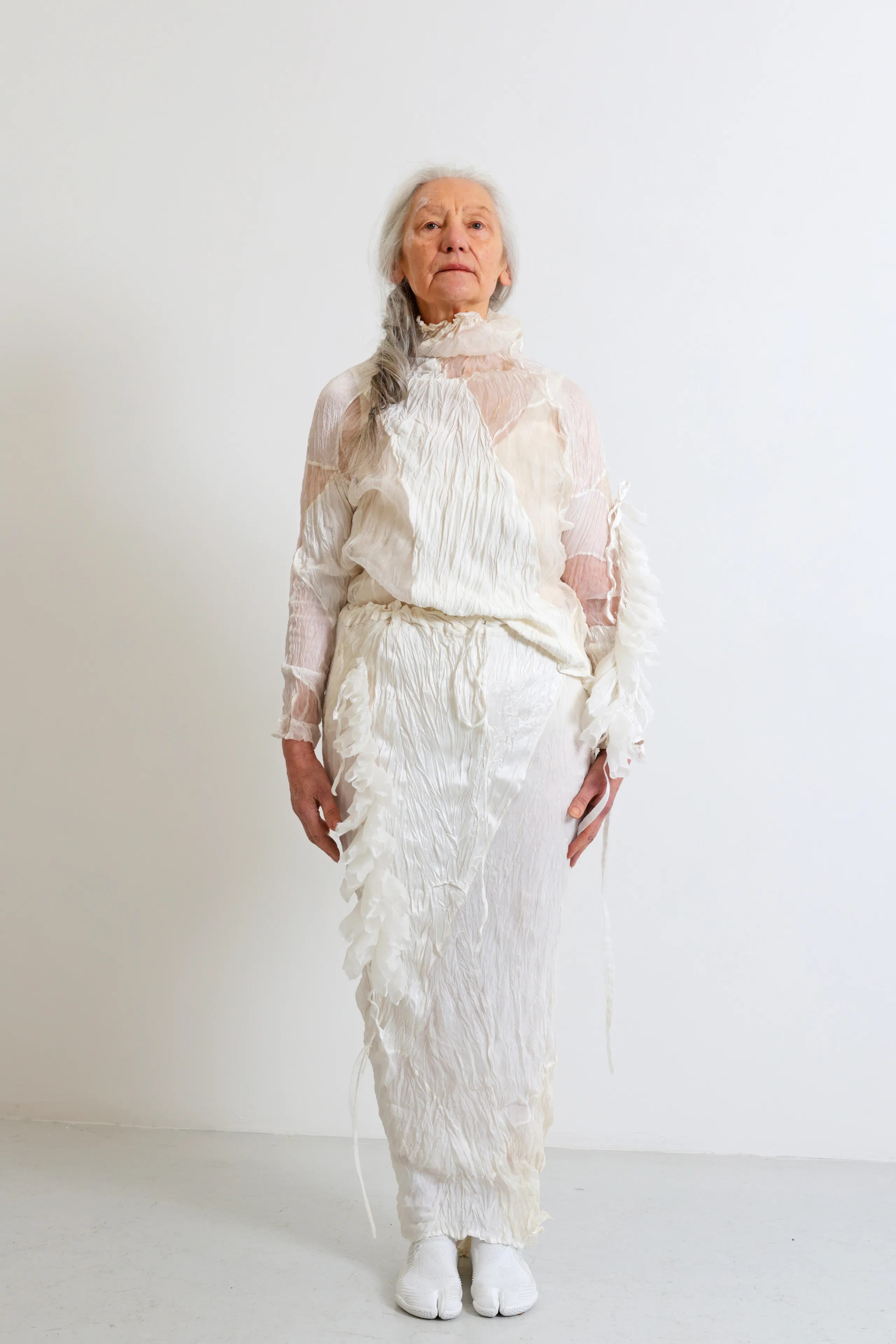
Founded in 2011, the brand has consistently rejected mass production in favour of craftsmanship, transparency, and environmental responsibility. Operating entirely from one studio in South London, the journey from sketch to finished garment remains intentionally contained, minimising environmental impact. The brand’s eponymous founder approaches design as a considered response to the environmental extremes we are living through, continuing to explore personal storytelling through textile manipulation and surface structure. Sustainability is not an aesthetic for the brand; it is its foundation.
Lost Touch unfolded as a botanical calendar in motion. Each of the twelve looks represented a flower or plant from across the year. From snowdrops and dandelions to ivy berries and foxgloves, the collection creates a quiet sense of seasonal progression. The narrative was subtle yet deliberate, brought to life through oversized three-dimensional florals that fluttered gently as the models moved through the space.
Crafted from surplus fabrics and off-cuts, the collection demonstrated English’s continued commitment to zero-waste principles and material consciousness. A restrained white palette, nuanced rather than stark, allowed silhouette and texture to take precedence. The absence of colour felt intentional, a blank canvas upon which embossing, drapery, and sculptural appliqué could speak.
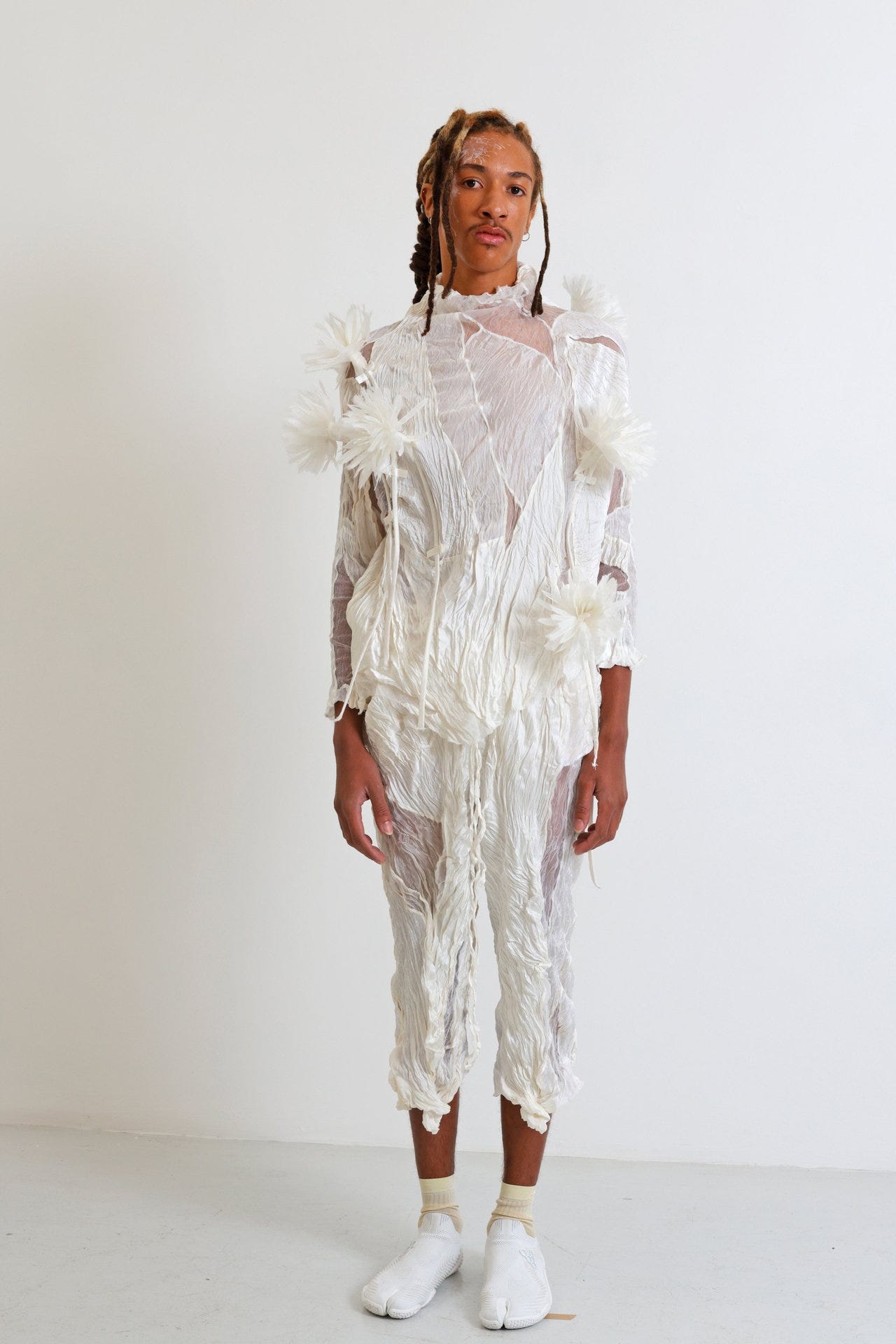
Garments ranged from translucent, delicately layered tops that caught and diffused the light, to boxy shirts and drawstring trousers that grounded the collection in wearability. English blended utility with poetic floral themes effortlessly. Loose, gender-neutral cuts reinforced a sense of comfort and ease while maintaining structural clarity.
Textural detail was where Lost Touch truly resonated. Sewn florals appeared almost pressed into the fabric, as though preserved between the pages of a book. Fluttering petals and sculptural forms added depth without overwhelming the purity of the palette. The collection was texturally rich yet visually calm, a careful balance of softness and structure.
Casting further reinforced the ethos of inclusivity embedded within the brand. Models of varying ages, races, and genders moved through the gallery space individually, drifting before settling into designated positions. Rather than a conventional runway, the presentation felt immersive and intimate. When the models eventually converged, the narrative reached a gentle crescendo, a living installation of white, tactile, and botanical symbolism.


As a whole, Lost Touch brought a grounding calm to the intensity of London Fashion Week. Delicate yet assured, the presentation offered a moment of pause. It’s a collection that understands the power of subtlety.
In transitioning from winter’s stillness to the quiet optimism of spring, English demonstrated that sustainable fashion doesn’t need to compromise on artistry or desirability. Through texture, narrative and craftsmanship, Lost Touch reaffirmed that conscious design can be both emotionally resonant and visually compelling. It was minimal in palette, yet maximal in intention.