

Four Standout Designers from Graduate Fashion Week’s Joint Collective Show
by Tia Janowski
Gathered inside the vast Truman Brewery, home to Graduate Fashion Week for the past decade, students, families, friends and industry professionals eagerly awaited the first runway show of the week on June 15th.
Opening the event was the GFW Joint Collective show, showcasing the work of graduates from nine universities across the UK, offering a glimpse into the creativity shaping the future of fashion.
From wearable womenswear to conceptual storytelling and innovative sustainable design, the runway celebrated a diverse range of perspectives, styles and techniques. Four collections in particular stood out for their originality, craftsmanship and compelling narratives.
Representing the Cambridge School of Visual and Performing Arts, Khadeeja Mafaz explored the transition from girlhood to womanhood through a deeply personal collection. A palette of soft pastels contrasted with rich reds, while crochet, velvet and exaggerated frills reflected the emotional shift from innocence to societal exceptions.
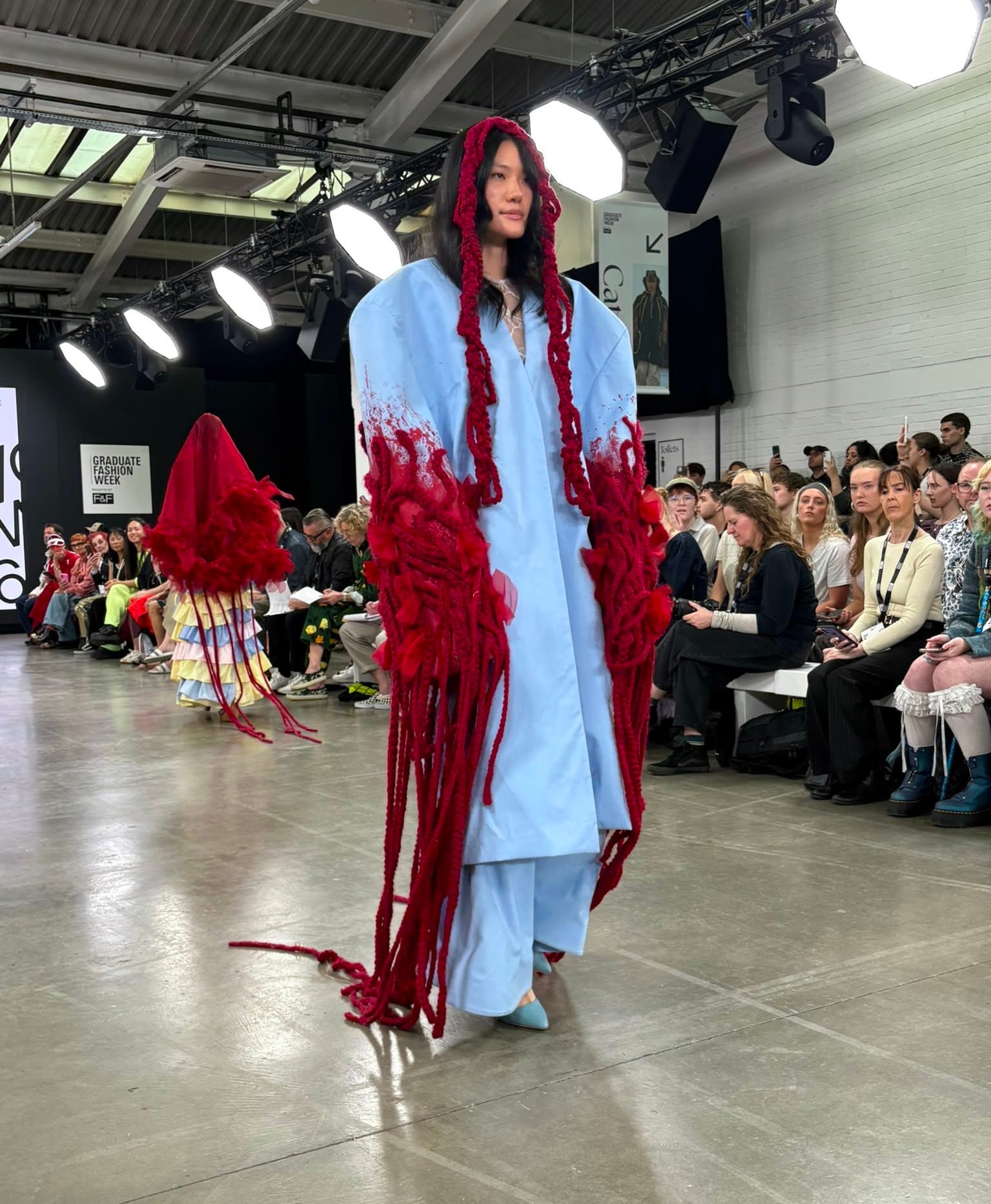
One of the collection’s standout looks featured red velvet emerging from layers of pastel ruffles, symbolising the emotional weight of growing into womanhood. Draped red crochet cascading down the back of another dress represented inherited expectations and the gradual constriction of femininity under social pressure.
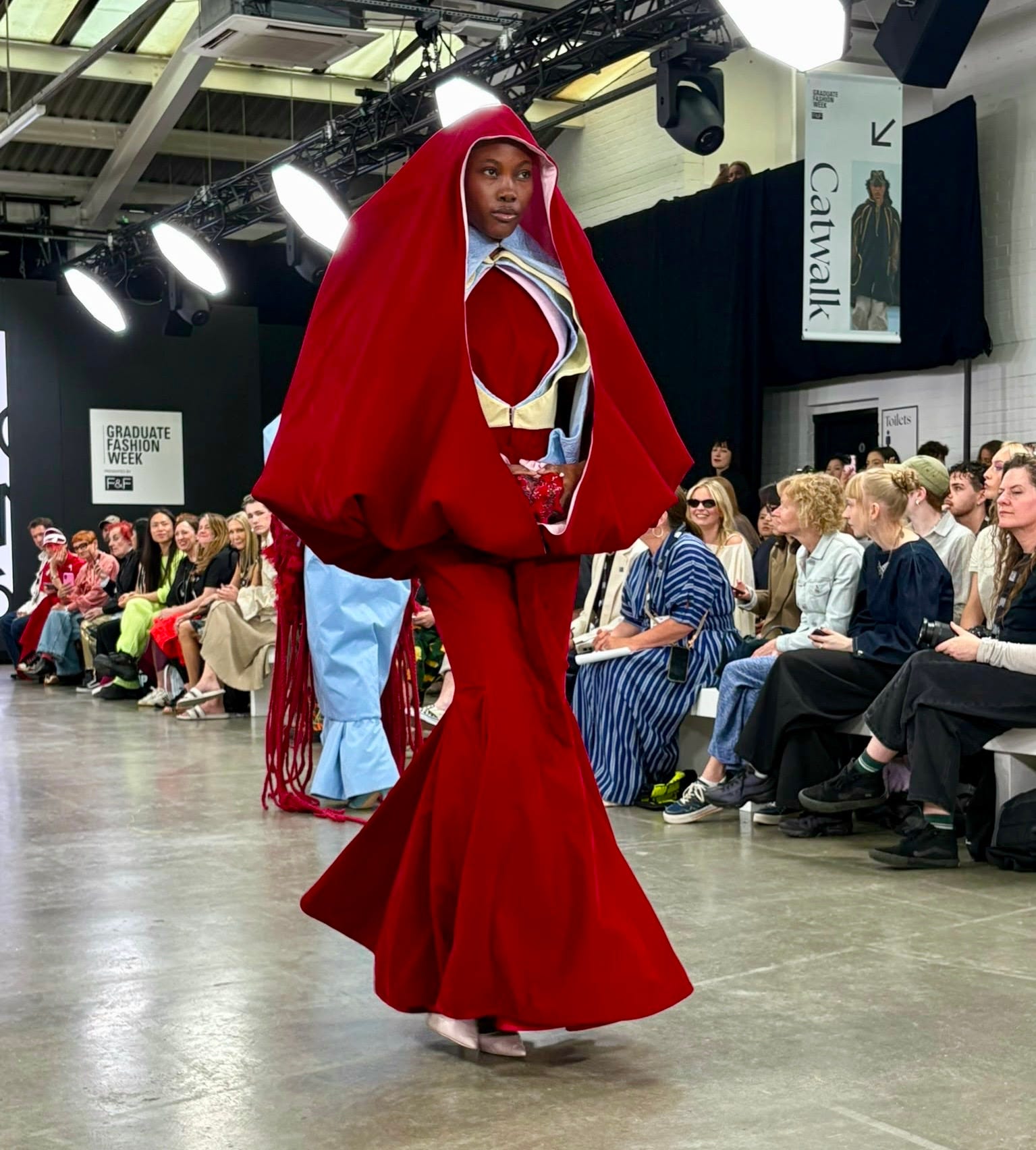
Elsewhere, references to school uniforms reinforced themes of structure, restriction and the loss of childhood freedom, creating a collection that was both visually striking and emotionally resonant.
Northbrook College graduate Amy Brigden followed with CHANGELINGS, an imaginative collection inspired by a cast of fictional characters. Working with a palette of yellow, pink, green and white, Brigden combined hand-crafted textiles, playful silhouettes and mismatched details to create a whimsical yet cohesive body of work.
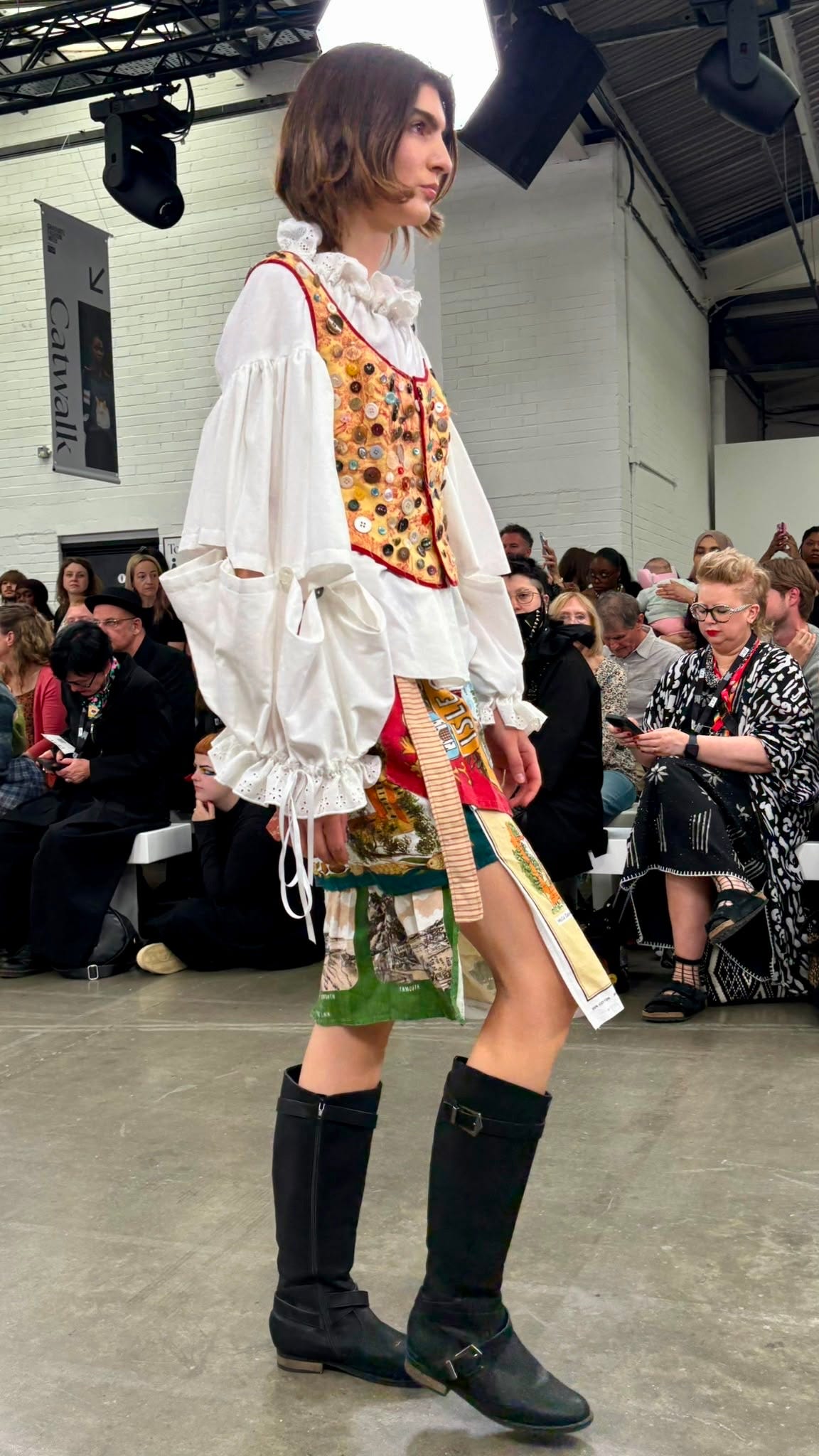
One look, The Archivist, featured boldly patterned fabric shorts and a vest adorned with colourful vintage buttons, paired with a voluminous white blouse to tell the story of someone who collects forgotten treasures.
Another, The Botanist, incorporated turmeric-dyed fabric, hand-knitted pieces and traditional pantaloons, reinforcing the collection’s earthy, handmade aesthetic. Though maximalist in approach, each look felt thoughtfully considered, bringing Brigden’s eccentric characters vividly to life.
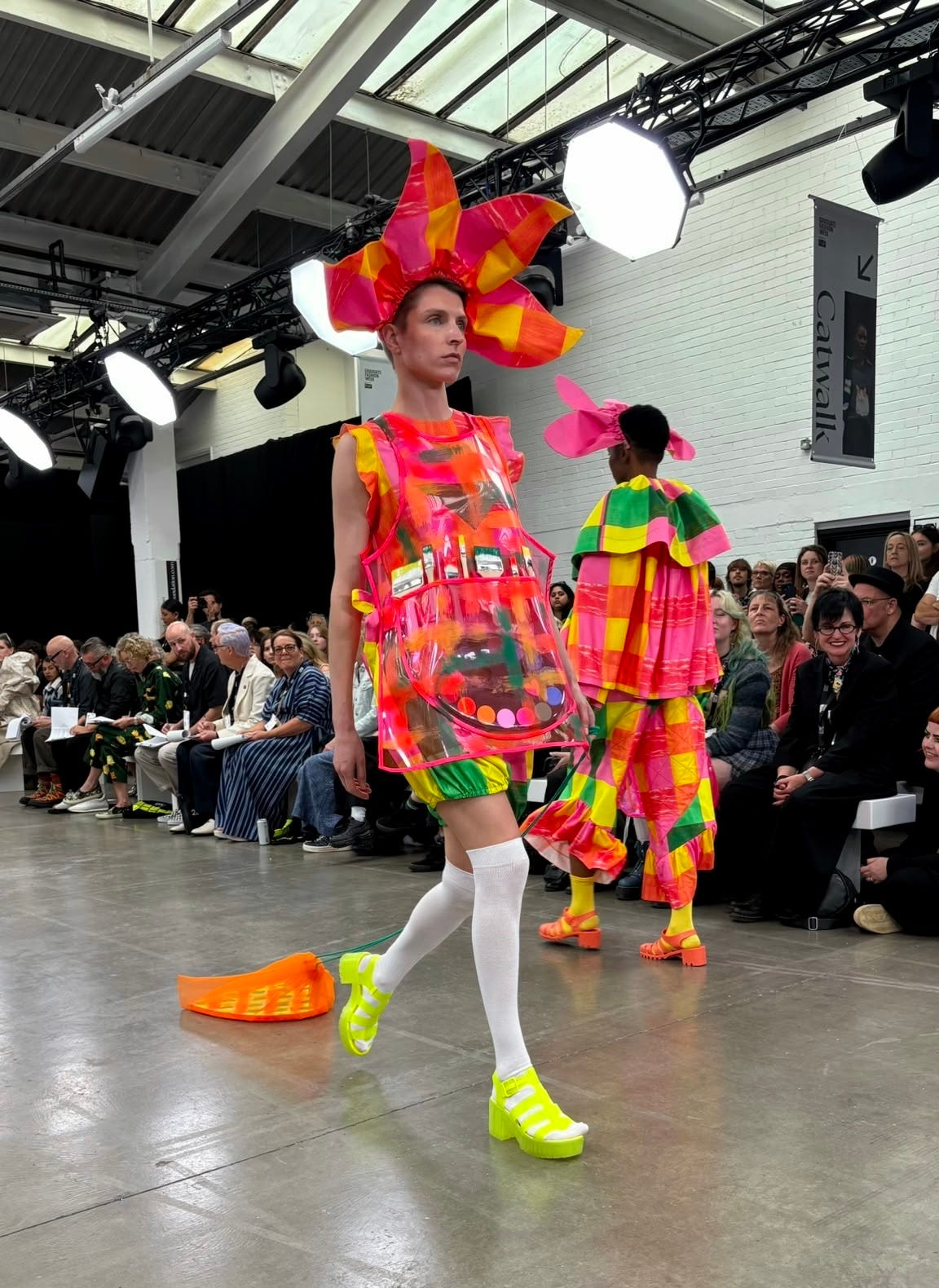
Leeds Arts University graduate Lucy Esgate injected the runway with energy through a collection that captured childhood nostalgia. Oversized dresses, pinafores and shorts were constructed from clashing neon patchwork fabrics reminiscent of early-2000s children’s television shows, while structural hoops in sleeves and skirts exaggerated the playful silhouettes.
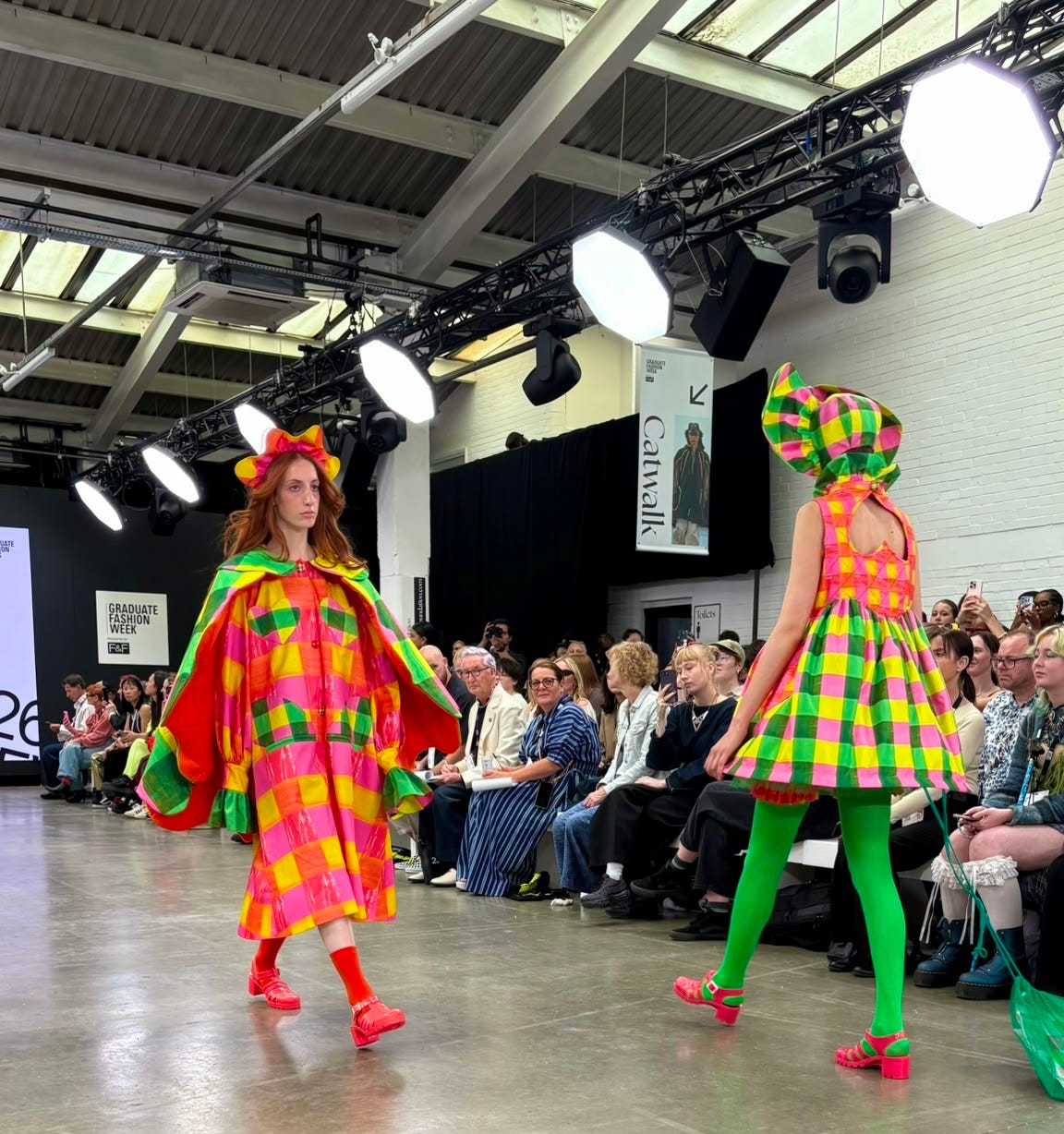
Large flower-shaped headpieces added another layer of theatricality, and one memorable look incorporated painting materials into a translucent pink apron, blurring the line between fashion and creative play. Despite its bold colour palette, the collection maintained a sense of wearability, demonstrating how nostalgia can be translated into contemporary fashion.
Closing the show was London College of Contemporary Arts graduate Khaos Rose Black with DOOMSDAY, a collection rooted in sustainability and post-apocalyptic storytelling. Constructed almost entirely from reclaimed sailing cloths, each garment embraced a resourceful, make-do aesthetic while preserving the original seams, metal rings, ropes and stitching from the sails.
One standout piece transformed a second-hand pair of dungarees into a sculptural hooded jacket, carefully patterned to maximise fabric usage while minimising seams for comfort and sensory accessibility. Asymmetrical construction, patchwork panels, and exposed original sail details created garments that were both practical and visually compelling.
DOOMSDAY proves that sustainability can exist alongside strong design and technical excellence while reflecting the growing emphasis on circular design and accessibility in graduate fashion.
The Joint Collective Show provided an inspiring opening to Graduate Fashion Week, highlighting the breadth of talent emerging from fashion courses across the UK. From deeply personal narratives to playful experimentation and innovative sustainable practices, each designer offered a unique perspective on the future of fashion. It was a fitting start to the week, setting a high standard for the creativity and craftsmanship still to come.
Edited by Emily Duff