

Graduate Fashion Week Proves British Fashion's Future Has Two Very Different Faces
by Tia Janowski
On the third day of Graduate Fashion Week, Winchester School of Art and Jimmy Choo London Fashion Academy (JCA) presented two contrasting visions of emerging fashion.
While Winchester embraced conceptual storytelling through experimental construction and craft, JCA focused on refined tailoring and contemporary ready-to-wear. Together, the joint show highlighted both the artistic and commercial potential of this year's graduates.
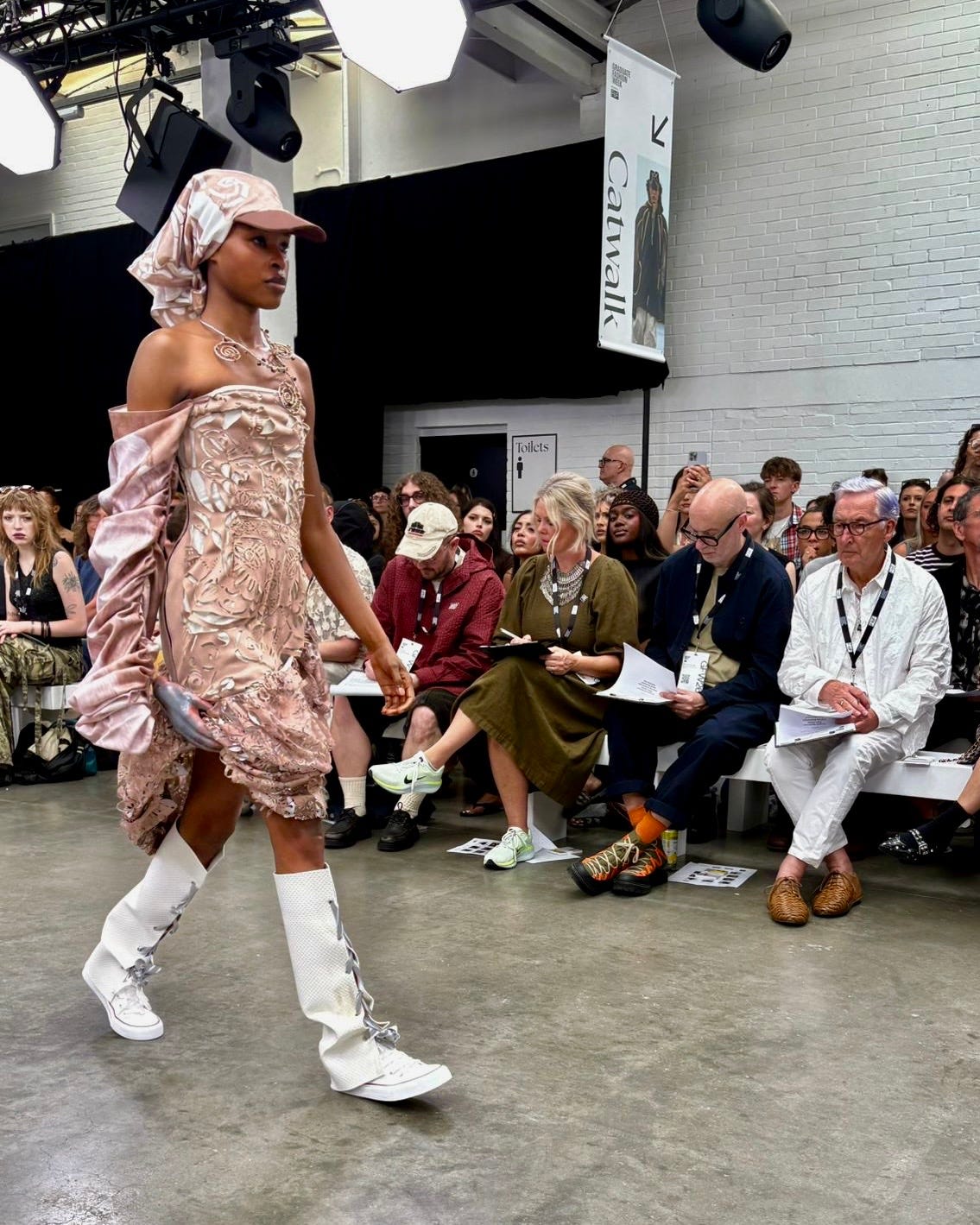
Winchester School of Art opened the show, presenting Mohan Wang, whose collection used structured silhouettes, layered construction and laser-cut symbolism to interrogate moral authority through the juxtaposition of the Animal Liberation Front. Working with a palette of pale pink, nude and white, Wang created oversized, slouchy garments adorned with delicate laser-cut floral motifs. One standout look featured an oversized hood integrated into the top, paired with a sculptural plastic hand wrapped around the torso. A white mini skirt with frayed, bandage-like edges contrasted with the delicacy of the laser-cut detailing, while slouchy white footwear unified the collection.
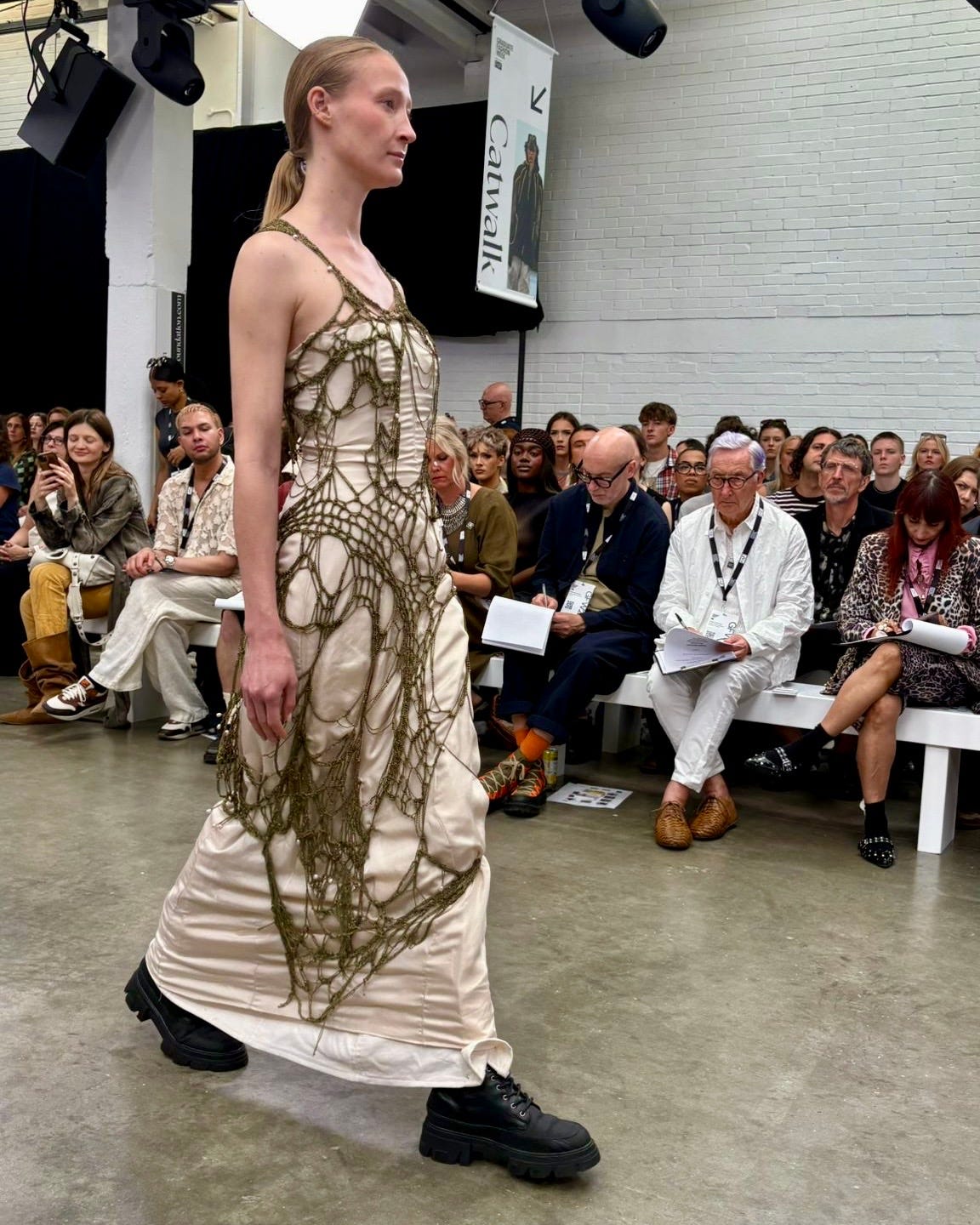
Grace Cowan followed with a collection exploring the representation of women in ancient mythology. Reimagining familiar tales beyond the male gaze, Cowan balanced sensuality with strength through silk, leather and metal elements. Handcrafted chainmail, natural dyeing and leatherwork combined hard and soft textures, while a palette of earthy tones and metallic accents reimagined ancient narratives for a contemporary runway.
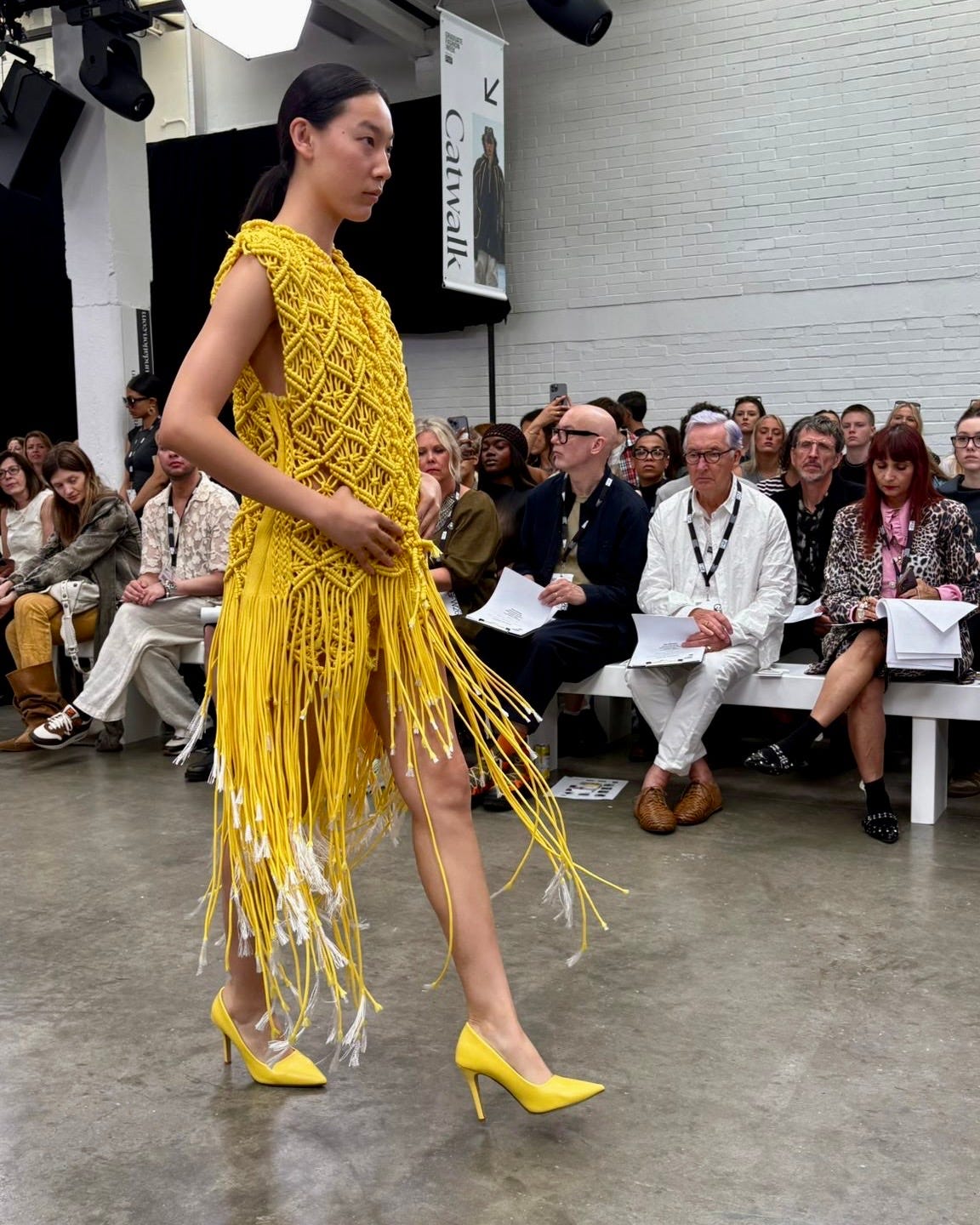
Closing Winchester's presentation was Xinyan Lin with Leave Behind, a collection exploring how relationships become traces of memory, examining what remains after people depart. Rope, weaving, fabric imprinting and controlled absence translated personal experience into tactile garments. A restrained palette of yellow and white allowed Lin's intricate knit and crochet techniques to take centre stage, creating pieces that felt both intimate and technically accomplished. A standout look, reminiscent of a 1960s mod dress, paired a fitted white cable-knit bodice with contrasting yellow knit detailing, creating depth, movement and texture on the runway.
In contrast, JCA shifted the focus towards polished, commercially minded collections.
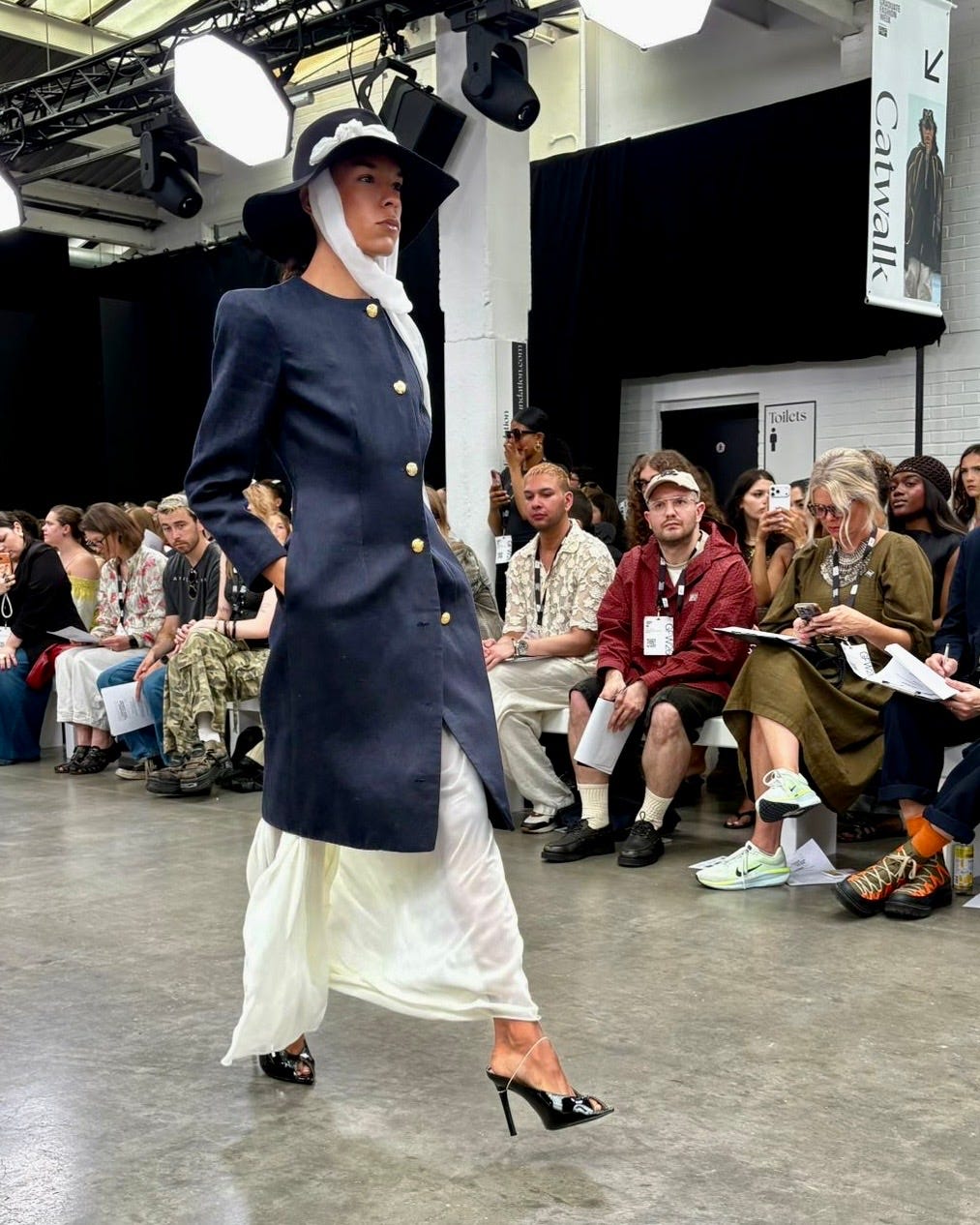
Delena Dawit impressed with a refined collection built around sharply tailored navy jackets, paired with fluid silk skirts and wide-leg trousers. Meticulous embroidery elevated the clean tailoring without overwhelming it, while a restrained palette of navy and white reinforced the collection's understated sophistication. A particular highlight paired balloon-shaped silk trousers with a cropped navy jacket and a sheer white headscarf, creating an elegant silhouette that balanced structure with movement.
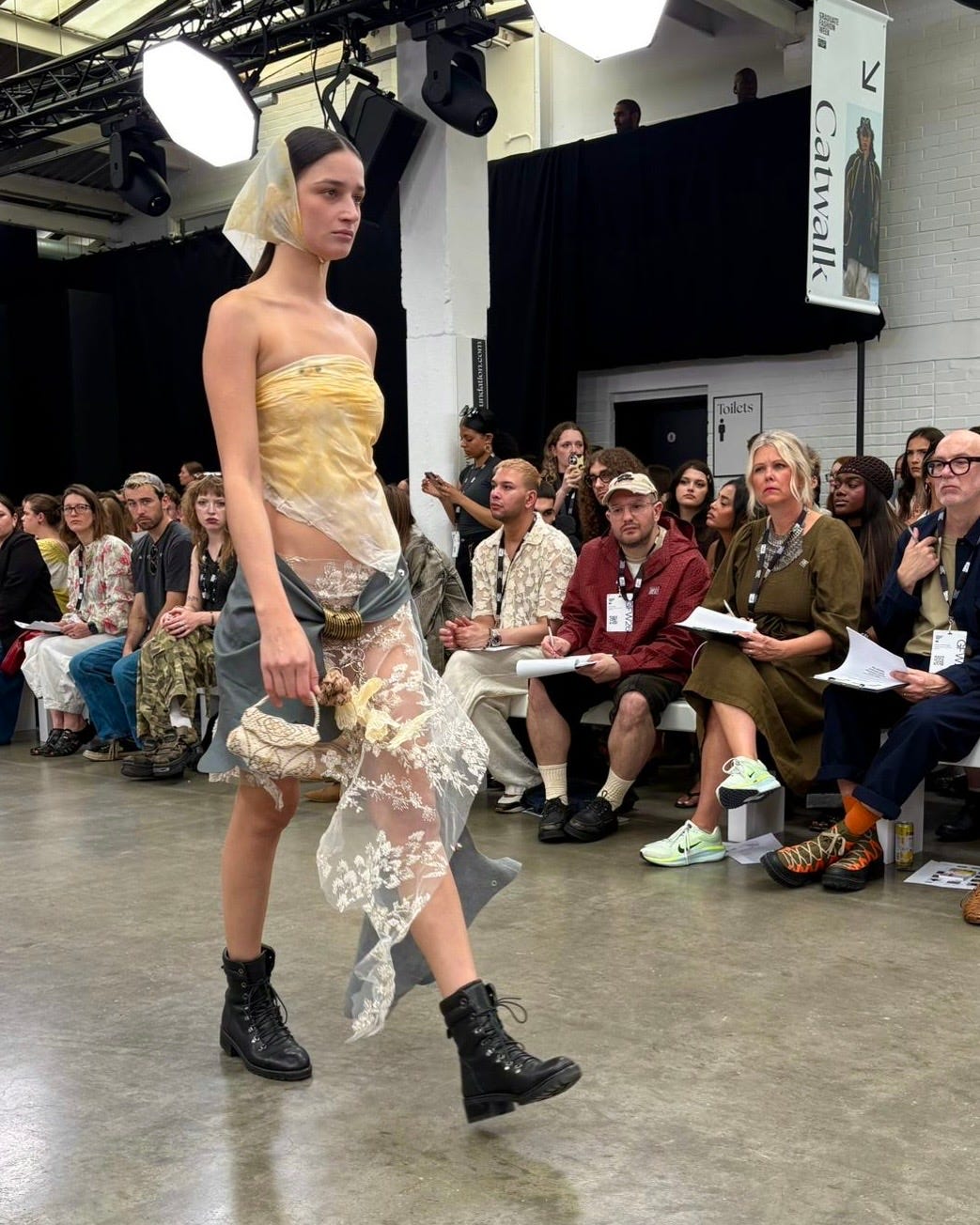
Grace Williams balanced romantic detailing with tougher denim silhouettes, creating one of the show's most versatile collections. Headscarves and lightweight fabrics gave several looks an effortless summer feel, while textured, almost skin-like fabrics contrasted beautifully with delicate lace. Draped silhouettes, layered textiles and contrasting fabric choices created a collection that felt both playful and contemporary.
Overall, the joint show demonstrated the breadth of talent emerging from both universities. Winchester School of Art pushed conceptual fashion through material experimentation and narrative, while JCA London Fashion Academy proved that technical precision and commercial appeal can coexist. Together, the collections offered an encouraging glimpse into the future of British fashion.
Edited by Emily Duff