

Sheffield Hallam Sent Assless Chaps and Condom Belts Down the Graduate Fashion Week Runway
by Tia Janowski
On the second day of Graduate Fashion Week, Sheffield Hallam University delivered a diverse and technically confident catwalk. Balancing commercial tailoring with playful experimentation, the show proved why the university consistently produces some of Graduate Fashion Week’s most exciting emerging designers.
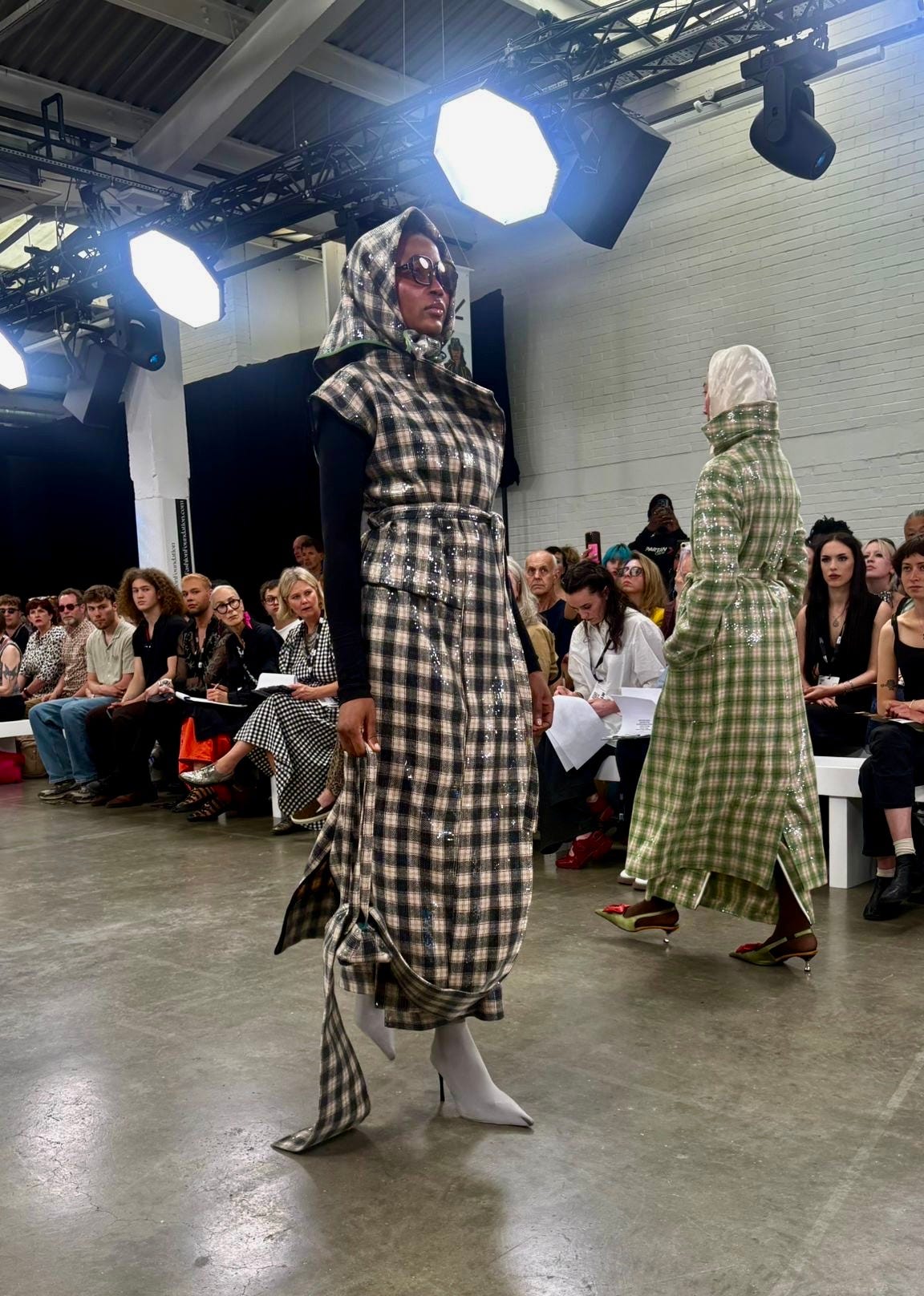
Among Sheffield Hallam’s standout designers was Zaineb Gharib, whose ready-to-wear collection drew inspiration from her English grandmother’s wardrobe. Drawing on her experience growing up in the UK with Iraqi heritage, Gharib reinterpreted it through a contemporary, modest lens.
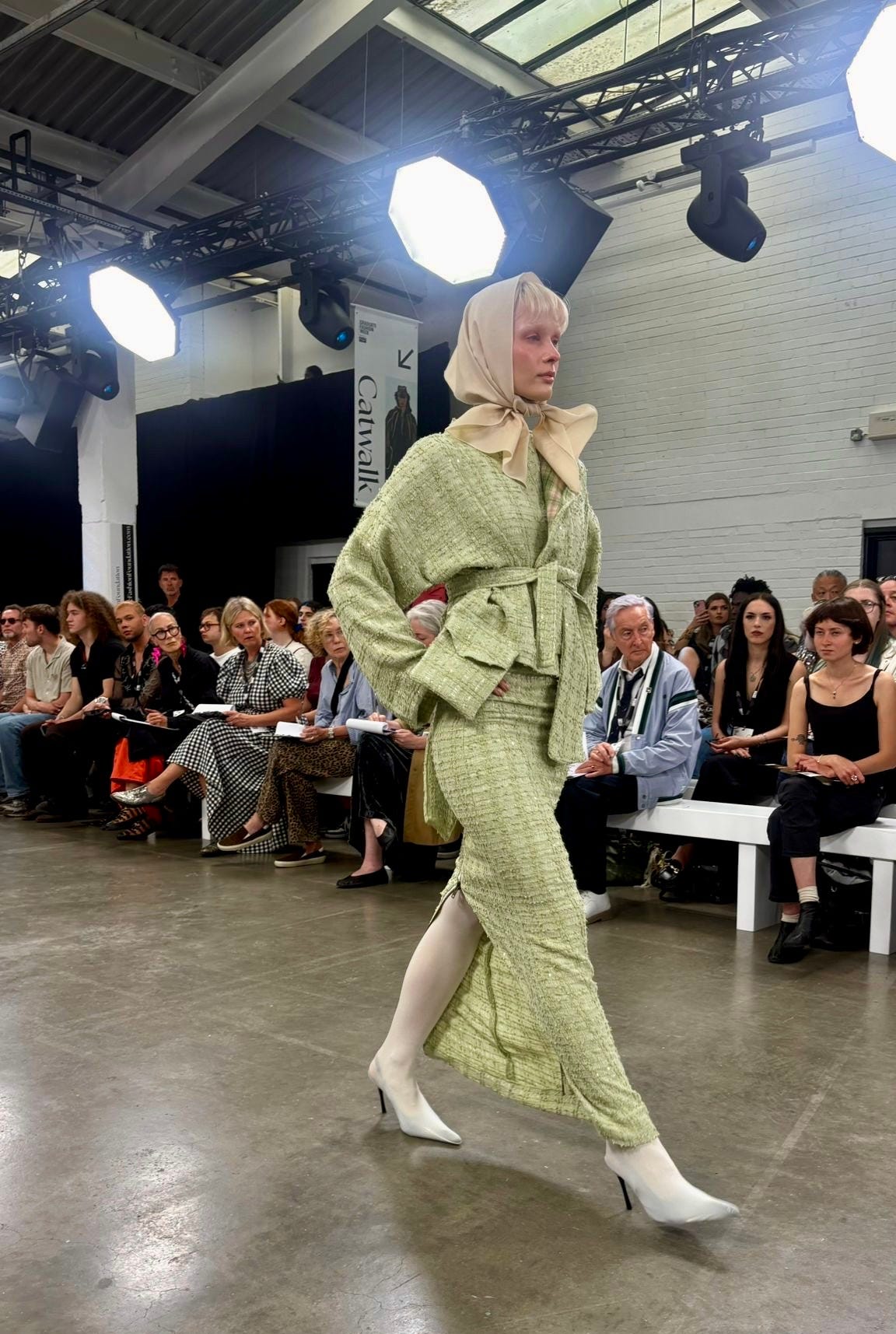
Using a palette of sage green, cream and black, Gharib presented a cohesive series of trench coats and two-piece skirt suits. Balancing modesty with contemporary styling, the collection felt both classic and timeless. Gingham prints and sequin fabrics reinvented traditional outerwear, giving the jackets an almost raincoat-like finish rarely seen in modern trench designs. Strong tailoring anchored the collection, bringing Gharib’s personal identity into a familiar silhouette.
Chloe Rogers presented The Freaks of Hardware, a collection that transformed workwear materials into garments inspired by queer club culture, combining structural tailoring with a bold palette of navy, mustard yellow and black.


Metal hardware became the defining feature, with intricately crafted hoop belts adorned with condoms, paddles and blindfolds. Each look introduced a distinct character. The Cowboy paired assless chaps with a studded black bralette beneath a cropped mustard jacket featuring exaggerated flared sleeves and a high neckline. The interplay between concealment and exposure made the collection playful, provocative and refreshingly unapologetic.
Emily Plant presented Growing Down, a joyful exploration of childhood and the pressure of adulthood. Inspired by the anxieties surrounding her twentieth birthday, Plant revisited the carefree creativity of dressing up as a child.
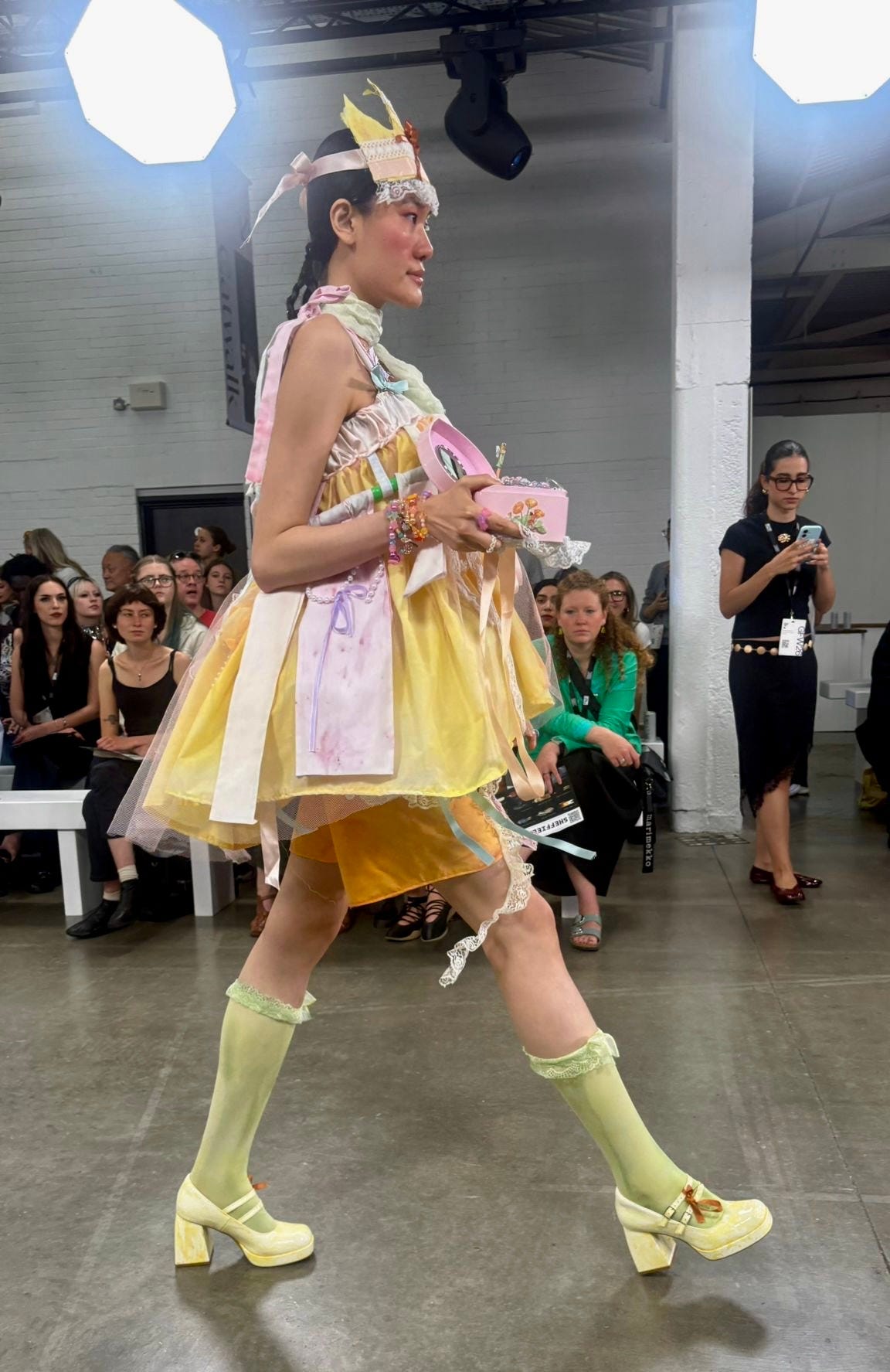
A palette of butter yellow, baby pink, orange, green and blue captured the spirit of childhood imagination. One standout look paired a dramatically ruffled skirt, adorned with bows and hula hoops, with a tie-dye bandeau and sheer flared sleeves. Finished with a dollhouse-inspired bag and a classic cone princess hat, the look perfectly embodied the playful chaos of a dress-up box. Though layered, exuberant and deliberately over-the-top, the collection never lost its sense of polish.
Jessica Price closed the show, transforming familiar bedding textiles into one of the show’s most comforting and imaginative collections.
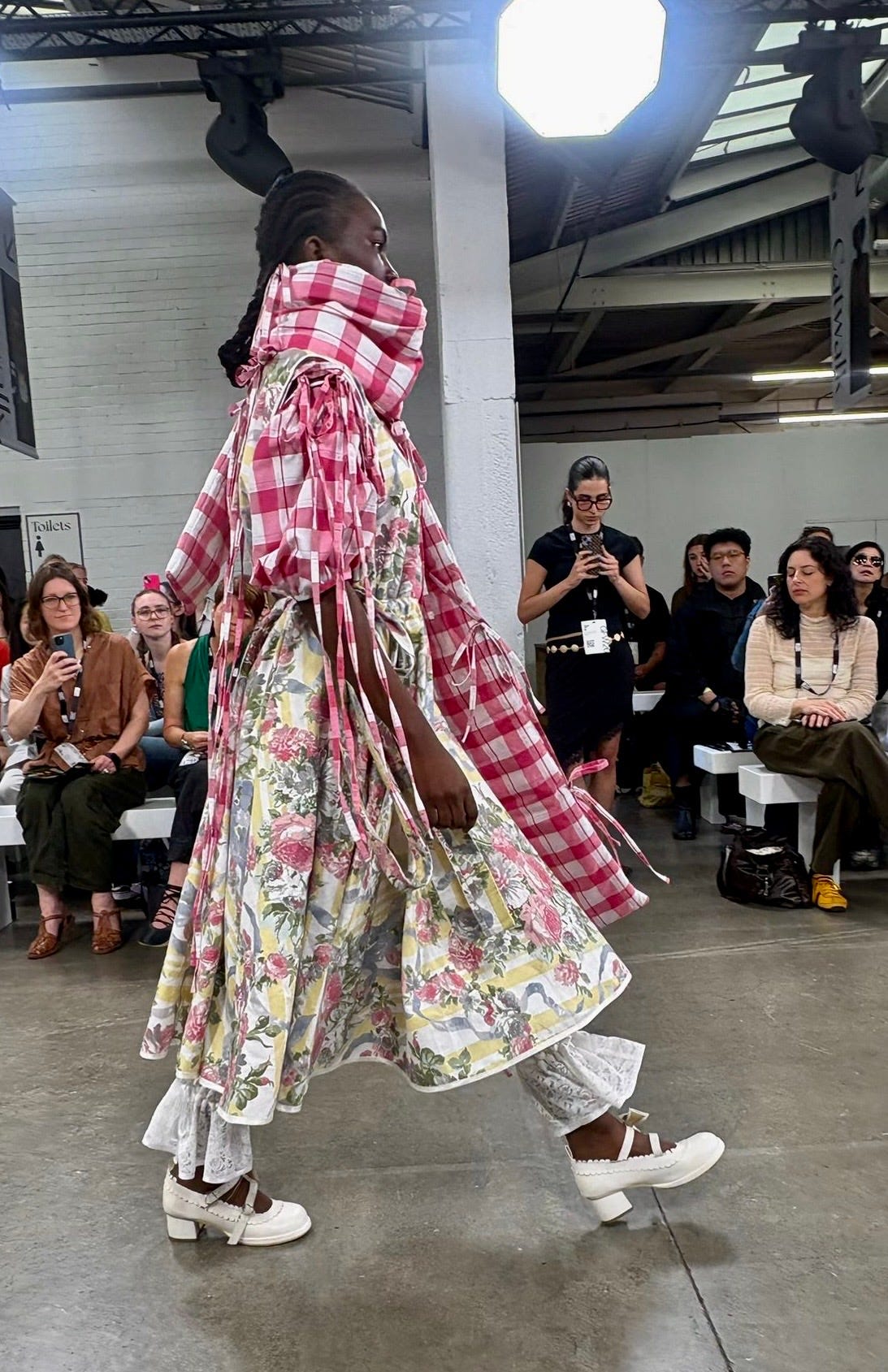
Traditional floral and striped fabrics were elevated through quilting and padding, creating garments rich in texture and dimension. Despite clashing pink gingham, vintage florals and striped textiles, the collection never felt overwhelming. Instead, it balanced nostalgia with meticulous craftsmanship across tea dresses, cropped tops and voluminous pantaloons. Puffy gingham scarves, quilted hoods and pointed hats added further layers of texture and whimsy.
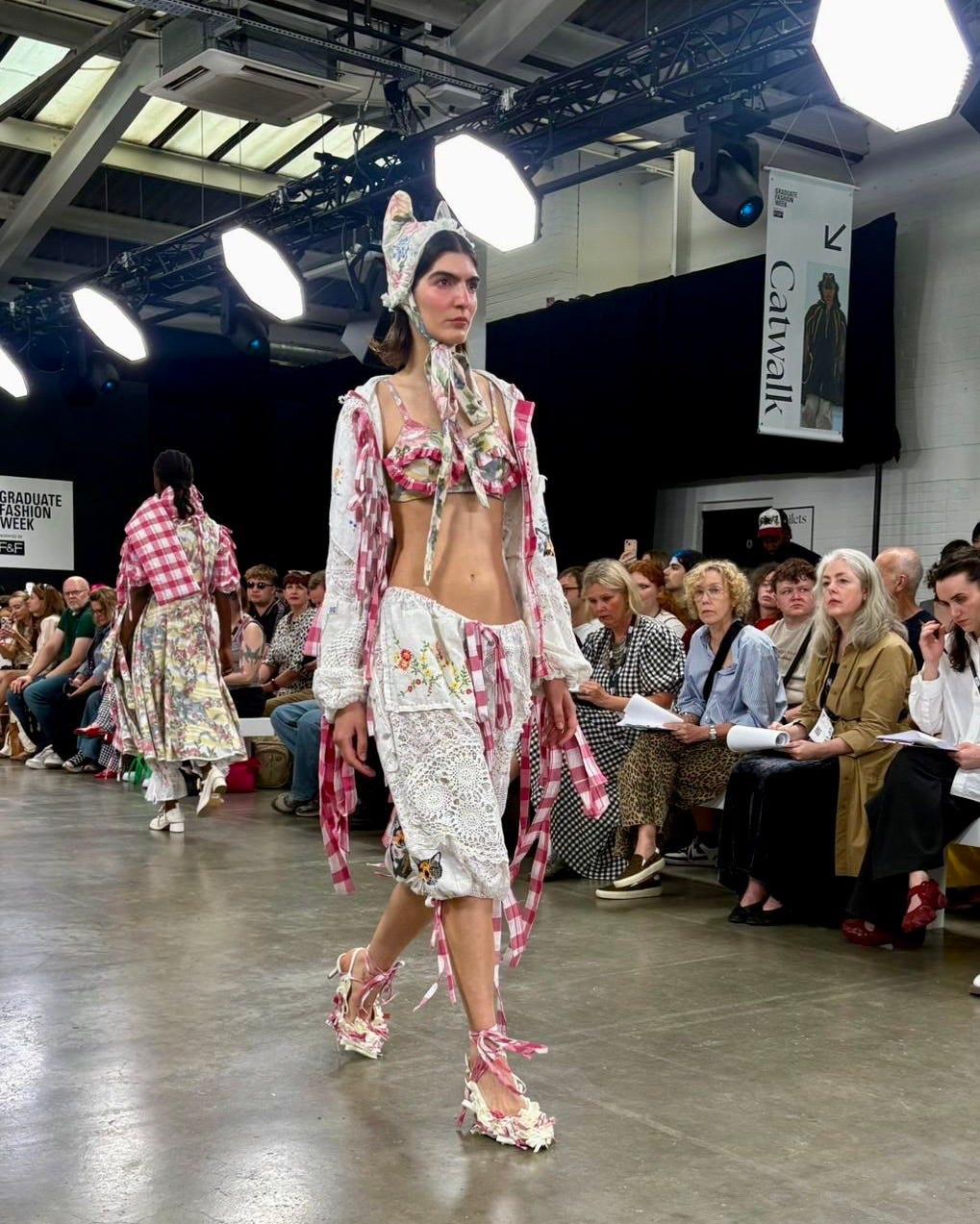
One standout look combined the central fabrics in a quilted ankle-length dress, paired with a matching hood. While little of the wearer was visible, the intricate construction and thoughtful fabric choices drew the eye, showcasing Price’s technical confidence.
Sheffield Hallam once again demonstrated why it remains one of Graduate Fashion Week’s standout institutions. Whether exploring identity, queer culture, nostalgia or childhood, each collection showcased technical confidence alongside a distinctive creative voice, leaving a lasting impression long after the final look left the runway.
Edited by Emily Duff