

The Devil Wears Prada 2 Trailer Breakdown
The first trailer for The Devil Wears Prada 2 has finally dropped — and while it leans into nostalgia, there are already clear signs that this sequel is taking a sharper, more self-aware approach to the fashion industry.
From subtle character moments to industry commentary, here’s everything we learned from the trailer.
Miranda Priestly Doesn’t Remember Emily
One of the most talked-about moments in the trailer is a blink-and-you-miss-it exchange where Miranda Priestly appears not to remember Emily Charlton.
It’s played lightly — almost as a throwaway line — but it reveals something much bigger about Miranda’s character.
In the original film, Emily was fiercely loyal, hyper-competent, and completely dedicated to Runway. And yet, years later, she’s seemingly forgettable to the very person she centred her life around.
It reinforces a core theme:
In Miranda’s world, people are replaceable — no matter how indispensable they think they are.
If the sequel leans into this, it could offer a much darker, more honest look at ambition and burnout in the fashion industry.
The World Is Bigger Than Runway Now
The trailer hints at a shift away from the insular world of a single magazine.
Quick cuts suggest:
a more global fashion landscape
multiple power players
a faster, more chaotic media environment
This aligns with the reality of 2026, where influence is no longer concentrated in one publication.
The sequel appears to be acknowledging that Runway — and what it represents — is no longer the only centre of power.
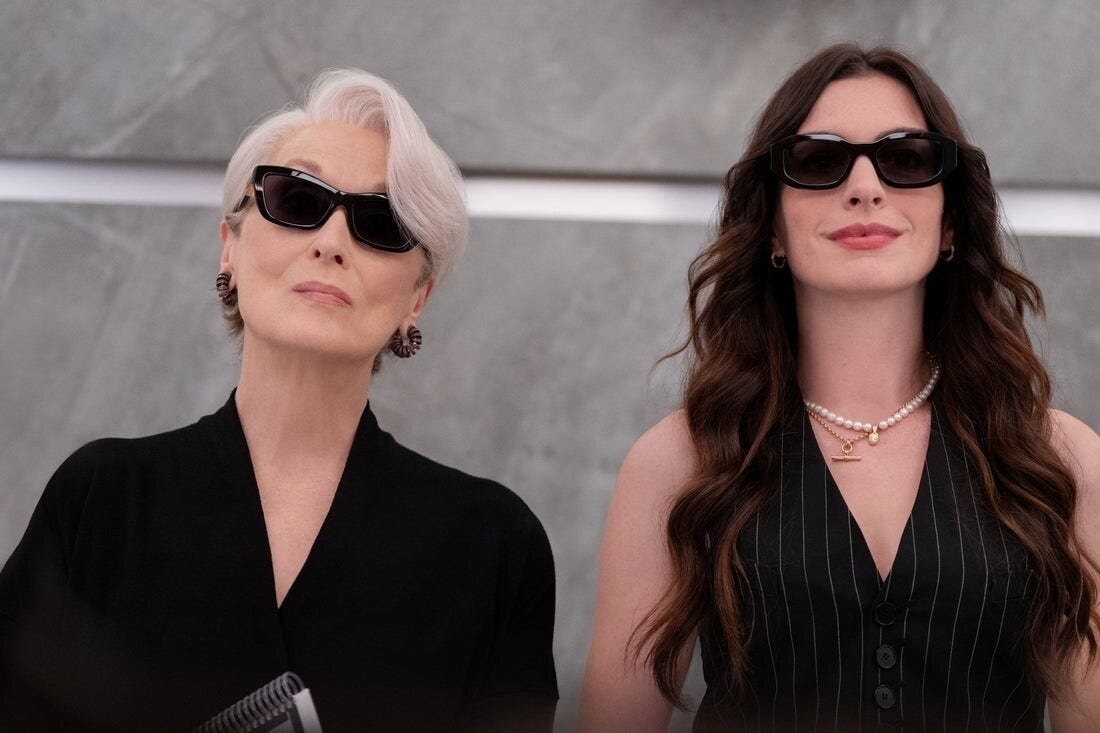
Andy Sachs Is Not The Same Person
While the trailer keeps Andy’s storyline relatively under wraps, there’s a noticeable shift in tone.
She appears more self-assured, more composed — and far removed from the wide-eyed assistant we met in 2006.
The question is no longer whether she can survive the industry.
It’s whether she chose to stay in it — and what that choice cost her.
Fashion Feels Faster, Sharper, More Digital
Visually, the trailer reflects a very different fashion ecosystem.
Gone is the slow, print-driven world of the original film.
In its place:
rapid-fire visuals
social-first energy
a sense of constant movement
It suggests the sequel will engage, at least visually, with the speed and pressure of modern fashion.
Nostalgia Is There — But It’s Not The Whole Story
Yes, there are callbacks. Yes, the tone feels familiar.
But the trailer doesn’t rely entirely on what worked before.
Instead, it hints at something more reflective — almost critical of the world it once glamorised.
That’s where the sequel has real potential not just to revisit The Devil Wears Prada, but to interrogate it.
The Real Question The Trailer Raises
More than anything, the trailer sets up one central tension:
Can the power structures of the original film exist in today’s industry?
Because if they can’t, then The Devil Wears Prada 2 isn’t just continuing the story but challenging it.
First trailers are designed to hook attention — and this one does exactly that.
But beyond the surface-level excitement, it also signals a shift in tone.
If the full film follows through, The Devil Wears Prada 2 could move beyond nostalgia and become something far more relevant:
a reflection on how fashion, media, and power have fundamentally changed.
And if that’s the case, it might have even more to say now than it did in 2006.