

Will The Devil Wears Prada 2 Ever Live Up to the Original or Are We Setting Ourselves Up for Disappointment?
by Emily Duff
There’s a very specific kind of fear that comes with a sequel to something you grew up watching.
For many, The Devil Wears Prada isn’t just a film, it’s a personality trait and the ultimate comfort watch. Now, exactly twenty years later, we’re being asked to let it evolve.
The closest comparison we have right now is the West End musical. And to be fair, it met expectations. In fact, I’ve seen it twice and am more than happy for that to become an annual tradition.
It knew exactly what it was: a love letter, not a rewrite. It didn’t try to outdo the original, just repackage it for a different format. That’s a very different challenge to what a sequel has to do.
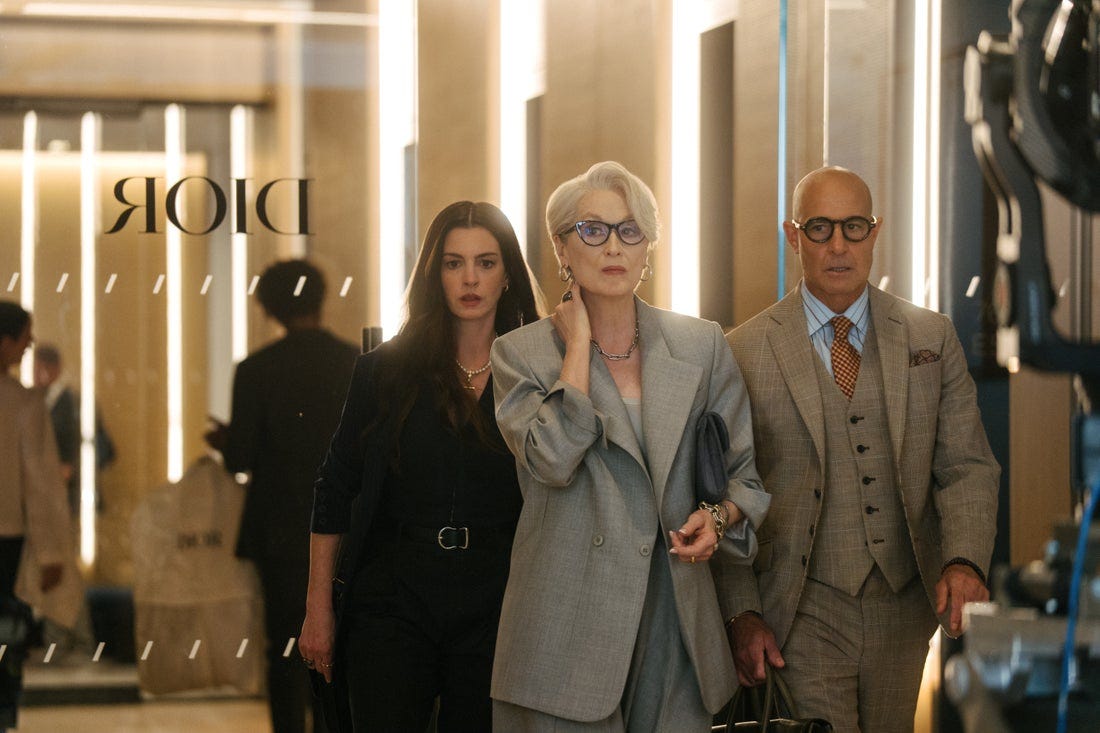
The Problem With Recreating (Near) Perfection
That opening sequence in the original film is still unmatched. The sharp contrast between the glossy, aspirational fashion world and Andy’s chaotic morning routine is still iconic two decades later.
But what does that look like now?
If they try to recreate it too closely, it risks feeling like parody. If they modernise it too much, it loses the charm. There’s a very thin line between homage and cringe and this film is walking it.
Take the cerulean speech. It’s not just a scene, it’s cultural canon. You can’t redo it and anything even remotely similar will feel like a cheap echo of something that only worked because it was unexpected the first time.
What could survive, though, is the tone.
The biting, dry, borderline ruthless dialogue - especially from Emily Charlton (Emily Blunt) - is what gave the original its edge. The hyper-specific, sarcastic, and notoriously quotable lines from “gird your loins” to the “hideous skirt convention” shaped an entire generation’s sense of humour (mine included).
That can be recreated because it’s not tied to the time period but to voice. Which, for a film about a magazine and an aspiring journalist, is quite special.
But even then, there’s pressure. The first film is stacked with these quotes. Every character has at least one line that you’ve got unintentionally memorised. That’s a brutal benchmark for the sequel.
Noughties and Nostalgia Bait
A huge part of why the original still hits is the world it exists in.The phones alone are basically a supporting character. Andy’s flip phone constantly going off with that sharp, slightly aggressive ringtone. The landlines ringing through the Runway office. The fact that being reachable at all hours felt invasive in a way that was still novel. Now? That’s just life.
If Andy has an iPhone, it immediately changes the tone. That tiny detail strips away a layer of escapism. The original film sits in that perfect pre-digital-saturation era — modern enough to feel relevant, but distant enough to feel romantic.
Is Nate’s Absence Loss or Liberation?
Nate, played by Adrian Grenier, has become increasingly unpopular over time. He represents a dynamic that feels outdated: the unsupportive partner framing ambition as a personal failing.
There’s been some noise about whether we should’ve seen his development, but that misses the point slightly. This story was never about him.
It’s about female power and ambition. The reason many young women love The Devil Wears Prada is because it offered a rare reversal of the trope, where men exist on the sidelines rather than the other way around.
If anything, leaving him behind feels like the most modern choice the film could make.
Casting and Cameos
We know Simone Ashley is stepping into a major role, which feels like a necessary and welcome shift. The original film’s lack of diversity hasn’t aged well, and this is an easy win if handled properly.
Another huge factor: Meryl Streep does not do sequels. While she famously prefers not to repeat performances, and has avoided doing so aside from appearing in a brief cameo during the final scene of Mamma Mia! Here We Go Again, she will be returning as Miranda Priestley in a main character role. This has to speak to a good script, surely?
But then there’s the cameos.
Names like Amelia Dimoldenberg and Pauline Chalamet have all mentioned having (albeit brief) cameos. While I’m excited by most of the names I’ve seen who’ve mentioned their small role - it could go either way.
It’s a line between feeling fun and culturally tapped-in or like the film is trying way too hard to prove it’s still relevant.
The original didn’t need that. Even its biggest cameo from Gisele Bündchen was understated and is exactly why it stuck.
Bündchen‘s small role as Serena, a Runway "clacker" employee was so well curated that, even with her short screen time, she became a reference in her own right. Her styling still makes ripples - with her tiny glasses trending a few years ago as similar style trended with Miu Miu's tiny oval glasses as the Office Siren aesthetic, or "corp-core," rose to popularity.
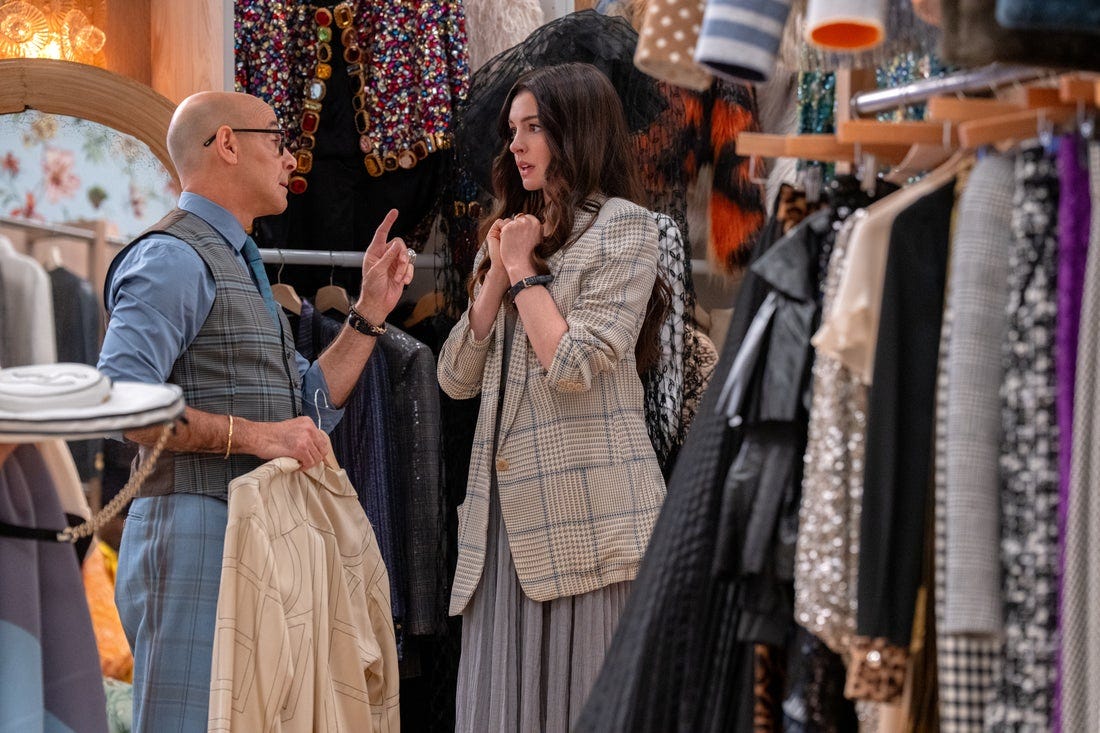
Bigger Budget ≠ Better Film
There’s talk of a much bigger budget this time around.
If anything, this raises the stakes. Bigger budgets often come with bigger expectations, more interference, and a stronger push toward mass appeal. And mass appeal is where things start to feel watered down.
Something quite charming about the original is that they had limited access to high fashion. Whereas with this sequel we’ve already seen the cast in character at the Dolce & Gabbana spring 2026 show, which was shot live during Milan Fashion Week. Is this fun or too much?
Though it was to film a scene, it also worked to build hype - a clever marketing tactic alongside all the other filming leaks.
On that note, on paper, the marketing has been strong. The Runway-inspired magazine is my personal favourite and the brand partnerships like Diet Coke (the ultimate fashion girl drink) and L’Oréal (an accessible but notably fashion forward beauty brand known for its presence at fashion weeks and celeb ambassadors) make perfect sense. They align with the world. They feel considered.
But then there’s the other side.
The overly literal merch. The heavy-handed references on pieces that scream cash grab rather than being a cultural moment. Nobody wants to wear a hoodie with the entire cerulean speech printed across it. Be serious.
That lack of restraint is what feels worrying. If the marketing can’t edit itself, will the film? Let’s not even get into the amount of product placement I’m expecting, too.
Though, much like Streep’s seal of approval coming simply from her agreement to return to the role, a certain figure’s involvement may also put our minds at ease that this sequel has substance beyond being a cash grab…
Anna Wintour infamously did not want the original to be made.
While she did not formally block the 2006 film, she reportedly exercised her influence to make its production difficult. As the fashion industry feared upsetting her, it is alleged that she caused production problems, reducing the film’s access to brands, designers and even locations.
Now, however, this sequel has more than just her backing. She’s playing a key part in the marketing. From a rare public appearance to present awards for Costume Design and Makeup/Hairstyling alongside Anne Hathaway to her first ever cover appearance on American Vogue alongside Meryl Streep, she’s gone above and beyond her usual role.
The Elephant in the Room: Body Politics
There’s also a conversation the sequel can’t avoid - The original The Devil Wears Prada is undeniably steeped in fatphobia.
Andy is repeatedly framed as “the smart, fat girl” and her size 6 body is mocked for being too large by fashion industry standards. While this doesn’t sit well, Andy is very obviously not a big girl and never has been known for that. So, while it’s played for laughs, it also works as a critique, highlighting just how warped and exclusionary that world is.
At the time, in 2006, those comments weren’t unusual. They blended into the background of mainstream media in a way that feels jarring now. A modern audience is far more likely to question it. To pick it apart. To refuse to laugh along so easily.
But it’s not simple enough to correct or acknowledge, it gets complicated.
Because while we’ve become more critical of those standards culturally, they haven’t exactly disappeared, in fact they’ve evolved. The rise of drugs like Ozempic has shifted the conversation again, repackaging extreme thinness as something clinical, aspirational, and — crucially — accessible, but only to a certain class.
At the same time, the cost of living crisis has made something as basic as food feel less guaranteed. There’s a growing, uncomfortable reality where wellness, restriction, and even scarcity are increasingly aestheticised — while access to actual nourishment becomes more precarious for others. We’re simultaneously watching more and more food banks open while we see food used as decoration by the wealthy.
So the question for the sequel isn’t just whether it addresses body image, but how.
Does it soften the tone to meet modern sensitivities? Does it lean further into satire? Or does it sidestep the issue entirely?
As real world fashion shows move further and further away from their short stint of prioritising body diversity, ignoring it would feel like a miss but handling it badly would feel worse.forced.
Soundtracking a Sequel
The original soundtrack works because it wasn’t trying to be the soundtrack. It pulled from existing songs that already had cultural weight so that hearing them now instantly transports you back.
The musical is full of original songs, and that constant phone tone, but they were written by Elton John based on key lines from the scene, which makes sense for stage, but not a sequel.
We’ve already heard the sequel’s original song Runway from Lady Gaga and Doechii. While both incredible artists that had me very excited, tracks written for films tend to feel different. Maybe I’ve held it to a high standard , but Runway felt too forced.
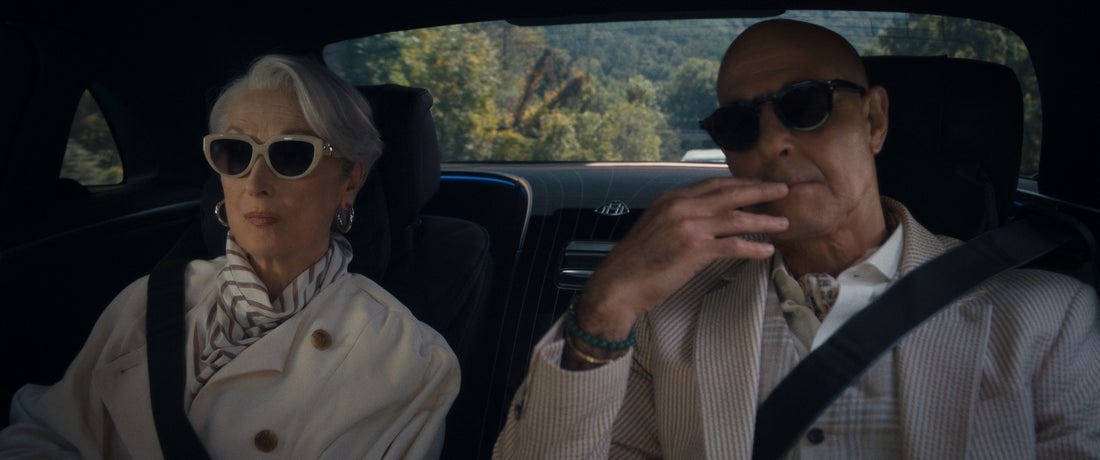
Why Does Everything Look So Dark?
The trailer’s lighting has already been called out online, and not in a good way.
There’s a wider issue at the moment with modern films leaning into darker grading, flatter tones, and this slightly washed out look. Even Wicked, set in one of the most visually vibrant fantasy worlds, Oz, fell into that trap.
The original Devil Wears Prada has this warm, almost sepia-toned finish. It feels like autumn in New York. It’s soft, rich, and fits that 00s RomCom aesthetic that a lot of people like me look for.
If the sequel loses that visual identity, it loses something bigger than aesthetics, it changes the whole atmosphere and style.
So… Will It Actually Be Good?
This sequel has a legacy which leaves it with two options: say something new, or rely on what already worked, and right now, it feels like it’s trying to do both.
That’s a risky place to sit because the truth is that no matter what this sequel does, it’s competing with something that people adore.
The fans that this sequel is for are protective over the original, that’s a hard audience to please.
That’s all.